When I got home from work, my neighbor was waiting on her porch with her arms crossed and one unsettling complaint: my house had been noisy all day. She said she’d heard a man shouting inside—again. I laughed it off at first, because that made no sense. I live alone, and no one should have been in there while I was gone. But the moment I stepped inside, something felt wrong. Nothing was missing. Nothing was out of place. And somehow, that made it worse. The next morning, instead of going to work, I pretended to leave, circled back, and hid under my own bed to find out who had been inside my house. For hours, nothing happened. Then, just when I started to think I’d imagined everything, I heard the front door open. Footsteps moved through the hallway like they belonged there. A man walked into my bedroom, stopped beside my bed, and muttered my name in a voice I knew far too well.

By the time I turned onto Maple Street that Wednesday afternoon, the paper handles of the grocery bags had already carved red grooves into my fingers, and all I wanted was to get inside, put the milk in the fridge, microwave whatever could be microwaved in under three minutes, and pretend the week wasn’t dragging me across concrete by the throat. The sky hung low and colorless above the row of houses, not quite threatening rain, just threatening mood, and the whole neighborhood looked as though it had exhaled and then forgotten how to breathe back in. Mrs. Halvorsen was standing on her porch before I even reached the walkway to my own house, planted there with the rigid expectation of someone who had been waiting specifically for me and was annoyed by the time it had taken me to arrive. Her cardigan was buttoned wrong, one side pulled higher than the other, but her arms were folded with such authority that the mistake only made her look more severe. She had the expression she reserved for the mailman when letters arrived damp, for the teenagers who parked too close to her hydrangeas, and for me whenever my grass grew half an inch higher than what she considered respectable.
“Marcus,” she called before I could pretend not to see her. “Your house has been making a racket again.”
I stopped at the bottom of my front path, shifting the bags against my palms. “A racket?”
She gave me a sharp look, as though I’d insulted her by repeating the word back. “Shouting. A man shouting. Middle of the day. It happened yesterday too, but today was worse. Around noon, maybe a little after. I knocked, but no one answered.”
I almost smiled from reflex, the way people do when they are surprised by something absurd and need a second to decide whether it deserves laughter or concern. “That can’t be right,” I said, and even to me the sentence sounded rehearsed, weak, too quickly assembled. “I’m not home during the day.”
Mrs. Halvorsen’s mouth tightened into a white line. She was nosy, yes, aggressively so, but she wasn’t frivolous. She collected details the way some people collected porcelain birds. Garbage days. Delivery times. Which kids cut through which yards after school. Who left for work at seven and who left at eight-twenty and who had been pretending to leave but really just sat in their car crying. She noticed things because attention was the closest thing she had to power. “Well,” she said, with the clipped patience of a person speaking to someone determined to be stupid, “someone was in there. Unless your furniture has learned to quarrel.”
I let out a short laugh I didn’t mean. “Maybe I left the television on.”
She tilted her head, unconvinced. “The television does not walk from room to room.”
Something in the way she said it made my skin tighten between my shoulder blades. “You heard it moving?”
“I heard a voice in the front room first, then later I heard it farther back in the house.” Her gaze slid to my front windows, then back to me. “A man’s voice. Angry, or irritated. Hard to tell through the glass. Not loud enough to make out every word, but it didn’t sound like a program.”
The bag with the milk was cutting into my right hand now, and I shifted it again. It would have been easy to brush her off, to shrug and make a joke and keep walking, but the certainty in her face unsettled me in a way I didn’t want to examine. Embarrassment rose first, sharp and familiar. There is something humiliating about the possibility that something is happening inside your own house without your knowledge. It suggests not just vulnerability but incompetence, as though the borders of your life are thinner than they ought to be and everyone can see it.
“Thanks for letting me know,” I said, defaulting to politeness because politeness is often the final plank people stand on when they have no idea what else to do.
Mrs. Halvorsen did not smile. “You should check your locks.”
“I will.”
She kept watching as I walked to the door, her gaze prickling between my shoulder blades. I fumbled my keys more than usual, suddenly aware of the silence behind the front door, aware of the narrow strip of shadow beneath it, aware of the fact that if she were right then whatever—or whoever—had been inside was no longer making a sound. The deadbolt turned. The latch clicked. I stepped into the house and was met by stillness so complete it felt curated.
That is the word I remember now. Curated. Not ordinary quiet, not the neutral absence of sound, but the kind of stillness that seems to have arranged itself a moment before you arrive, like a room full of people pretending they had not just been talking about you.
I stood in the entryway for a few seconds longer than necessary. The air felt cool on my face. The thermostat sat where it always sat, dumb and innocent on the wall. There was no obvious sign of disturbance. No smell of cigarette smoke or cologne, no overturned lamp, no boot prints on the hardwood, no drawers hanging open with their contents torn apart. The framed print above the small hallway table hung exactly straight. My keys went into the bowl by the door with a sound that seemed louder than it should have. I set the groceries on the kitchen counter and listened.
Nothing.
The refrigerator hummed. Somewhere a pipe ticked once as it adjusted to temperature. Otherwise nothing. I checked every room anyway, because once a thought enters your mind it wants a house of its own. Living room, kitchen, bathroom, laundry alcove, spare room, my bedroom, closet, under the shower curtain, behind the half-drawn drapes, back door, windows, garage. The house presented itself to me as it always did: modest, familiar, faintly in need of repainting, unapologetically ordinary. Nothing looked moved. My desk still held the unpaid electric bill beside the coffee ring I had meant to wipe up that morning. The stack of novels on the bedroom floor still leaned at an angle dangerous enough to collapse if you breathed on it too hard. The blue ceramic bowl my mother had once given me still sat on the dresser holding receipts, coins, and the cuff link my father had lost in 2008 and somehow I had found years later in the lining of an old coat.
I told myself Mrs. Halvorsen had heard the television from another house. Or construction workers. Or a podcast from an open car window. Neighborhood sounds drift. Walls lie. Memory embellishes. I put the milk away. I put away the bread, the eggs, the bag of oranges I had bought even though I was not sure I still liked oranges. I heated leftover pasta. I ate standing up at the counter because I was too restless to sit. Every few minutes I caught myself listening again.
Nothing happened that evening. No strange sounds, no footsteps, no voice. But once the idea of a presence entered the house, it did not leave simply because evidence failed to support it. It changed texture. It became atmosphere. I locked the front door, then checked it twice. I made tea, forgot to drink it, and found it cold near the sink an hour later. I turned on the television for noise, then turned it off because every sound beneath the volume made my spine tighten. When I finally went to bed, the darkness in the room felt more occupied than usual, as though each corner held its own withheld intention.
Sleep became a series of failed negotiations. The house creaked the way old houses do, but each creak arrived sharpened by suspicion. Wind moved against the siding and sounded like fingers testing for weaknesses. The refrigerator kicked on at one in the morning and I sat up before remembering I owned a refrigerator. At three I got out of bed and checked the locks. At four-thirty I stood in the hallway barefoot, listening to my own home as though it were an animal I had found in the woods and was not entirely sure I could trust. The silence had layers in it. My imagination kept slipping beneath them and returning with shapes.
By dawn I was tired enough to feel fragile and angry enough to feel foolish. Fear rarely arrives alone; it usually brings shame. I hated that a neighbor’s remark had turned me into a man standing in a dark hallway at four-thirty in the morning in his underwear, one hand on the wall, listening for ghosts. But beneath the embarrassment there was something harder. A small, relentless certainty that if I went to work and spent another day wondering what happened in my house between nine and five, the wondering itself would eat holes in me.
I called my manager while making coffee I knew I would not drink. I told her I was sick. Not entirely a lie. My body did feel wrong, as though my organs had been rearranged overnight and were still testing their new positions. She said to rest and keep her posted. I thanked her, hung up, and stood very still in the kitchen as the coffeemaker hissed and dripped behind me.
The plan I came up with belonged in a cheap thriller. That was obvious even to me while I carried it out. Still, ridiculous plans can feel like the only available form of courage when the alternative is passive fear. At seven-forty-five I opened the garage, backed my car out far enough for anyone watching from the street to see it, then waited a beat before reversing back in and shutting off the engine. The garage door whined closed. I entered through the side door and locked it softly behind me. The house seemed to recognize the difference between my ordinary return and this one; every step I took sounded illicit.
I moved through the hall and into my bedroom. The bed skirt had long ago been abandoned because it annoyed me when I vacuumed, so the space beneath the bed was open except for dust, a storage bin of winter clothes, and two shoes I had been too lazy to retrieve after kicking them off months earlier. I dropped to the floor, wincing as one knee hit the hardwood, then slid underneath feet first. Dust rose into my nose at once, dry and stale and intimate. I pulled the comforter lower from underneath so it draped closer to the floor, hiding the gap. My heart was beating hard enough to hurt.
I lay there with my hands clasped over my stomach at first, because I didn’t know what else to do with them. The slats beneath the mattress were close above my face. The underside of your own bed, viewed from below for hours, becomes a landscape both ridiculous and oppressive. Tiny staples, old wood, shadows that don’t deserve the size your mind gives them. I had my phone in my pocket on silent, or I thought I had set it to silent. I checked it twice in the first ten minutes, then stopped because every screen glow felt dangerous.
Time under a bed is not ordinary time. It stretches and collapses unpredictably. The first half hour felt like a test of endurance, the second like punishment, the third like an argument with reality itself. Every sound magnified. A truck outside. A dog barking two houses over. Mrs. Halvorsen’s front gate clanging shut. Somewhere far off, the thin shriek of a leaf blower. I began cataloging the noises because naming them helped keep panic from turning every vibration into a footstep.
Around nine-thirty I started to feel ridiculous. By ten-fifteen my left arm had gone numb. At ten-fifty I had fully inhabited the humiliating possibility that I was an adult man hiding under his own bed because an elderly neighbor with a surveillance hobby had overinterpreted the acoustics of suburbia. I imagined crawling out at five in the evening coated in dust and self-contempt. I imagined showering. I imagined never telling anyone. I imagined laughing about it alone ten years later if I happened to survive becoming this kind of person.
At eleven twenty, the front door opened.
I know the sound of my front door. Anyone knows the sounds of their own house the way people know the texture of familiar voices. The deadbolt had a faint metal hitch in the turn. The lower hinge always whispered a fraction of a second after the door itself moved, as if objecting too late to matter. What I heard then was not a forced entry. It was a key. A practiced hand. A door opened with care by someone who expected it to open.
Every muscle in my body clenched so fast I almost bit my tongue.
The door closed softly. There was a pause, short but unmistakable, the pause of someone listening. Then footsteps crossed the entryway and moved down the hall. Shoes scraping lightly, a measured pace, unhurried, not the furtive tread of a burglar who fears witnesses. The rhythm touched some part of my memory without giving me anything useful. Familiar, I thought wildly. Familiar from where? Work? Childhood? Some old neighbor? My own pulse rushed too loudly in my ears for thought to keep balance.
The footsteps entered the living room. A drawer opened. Something clinked. Then a man’s voice, low and irritated, carrying just enough for me to make out the words: “You always put everything where it doesn’t belong.”
My mouth went dry.
Not because of the sentence itself. Because he knew enough to be annoyed at my habits.
The footsteps moved again. Hallway. Kitchen. A cupboard door. A mutter I couldn’t catch. Then toward the back of the house, closer, closer. When the bedroom door opened I had to press my lips together to keep whatever sound rose in my throat from escaping.
He entered as though he belonged there. I could see only from shin-level at first: brown leather boots, well kept but old, the kind worn by men who value durability over style. Denim. The lower edge of a dark coat. He crossed to the dresser and pulled out the top drawer. Socks shifted. Wood slid and shut. He moved to the closet. The door rasped open. Hangers clicked together.
“You’d lose your head if it wasn’t attached,” he said, almost conversationally, and the strange, terrible intimacy of hearing a stranger criticize me in my own room sent cold across my scalp.
I needed to see him. Fear had one shape when it was abstract and another when it wore a face. I shifted carefully, inching my shoulder toward the edge of the bed to widen my angle. Dust dragged across my cheek. One floorboard sighed under my movement. I froze. The boots stopped. A silence opened so suddenly it seemed to ring.
Then the boots resumed. He had not heard. Or had heard and dismissed it. He stepped to the top shelf of the closet, reached upward, and brought down a box I had never seen before. Blue cardboard, corners worn white. He held it with the familiarity of ownership, not discovery.
My mind snagged on that impossible detail. A box from my closet that I did not recognize. My house was not large enough to conceal mysteries. Or so I had thought.
He opened it. Papers rustled. He said something under his breath in a tone too soft to catch.
My phone vibrated.
Even now I can feel the exact quality of that vibration against my thigh: tiny, insectlike, absurdly small for the devastation it carried. I had silenced the ringer, but not the vibration. In the sealed quiet of the room it sounded cataclysmic.
The boots stopped.
All the blood in my body seemed to rush to my face and then away from it.
A few seconds passed. Not many. Enough.
Then the boots turned toward the bed.
He crouched slowly. His fingers appeared first, broad-knuckled, gripping the edge of the comforter. The fabric rose. Light flooded the gap. I saw the underside of his jaw, the roughness of stubble, the beginning of a face lowering into view.
I reacted without thought. I rolled hard to the opposite side, slammed my shoulder against the nightstand, came up half crawling, half scrambling, and dragged the lamp off with me. It hit the floor with a crack that seemed to split the room in two. By the time I found my footing I had the heavy ceramic base in both hands like a club. The man stood as well, backing one step away rather than toward me.
And I saw his face.
There are shocks that arrive as explosions and shocks that arrive as recognition delayed by disbelief. This was the second kind. My brain kept offering false categories to contain him. Neighbor. Cousin. Older version of me. Some grotesque coincidence. He wasn’t my double, not in the dramatic way stories like to dramatize resemblance. His jaw was squarer than mine, his nose slightly bent as if it had been broken years ago and healed without complete cooperation, his brow heavier, his hair darker at the temples. But the structure beneath the differences was close enough to make my skin crawl. It was like seeing a family trait reflected from an angle I had never known existed.
He stared back with an expression that was not surprise exactly. More like the weary irritation of a plan interrupted too soon.
“You weren’t supposed to be here,” he said.
My grip tightened on the lamp. “Who the hell are you?”
He lifted his hands, not high, just enough to show they were empty. “My name is Adrian.”
“What are you doing in my house?”
He glanced at the broken lamp, then at me, then around the room as if orienting himself inside a moment he had hoped to avoid. “I’ve been staying here during the day.”
The sentence landed inside me with sickening clarity. “Staying here.”
“Only when you’re gone.”
“For how long?”
He hesitated. “A few months.”
The room seemed to tilt slightly, not physically but morally, as though the geometry of my life had been altered. “You’ve been coming into my house for months.”
“Yes.”
“You’ve been walking through my rooms. Touching my things. Going through my closets.”
His jaw tightened. “Not to steal.”
“That is not the part you should be correcting.”
He closed his eyes briefly, then opened them again. “You’re right.”
I held the lamp higher. My arms were beginning to shake from adrenaline. “How did you get in?”
“I have a key.”
The words were so incompatible with everything I believed about my own life that for a second I thought I had misheard them. “A key.”
“Yes.”
“From where?”
He looked at me with an expression I still cannot describe cleanly. Pity, maybe. Regret. The burden of knowing he was about to split open the floor beneath my feet. “From your father.”
The lamp nearly slipped in my hands. “My father is dead.”
“I know.”
“He died when I was nineteen.”
“I know.”
Rage rose then, bright enough to cut through fear. “So unless you’re speaking to him in the afterlife, you should pick a better lie.”
He swallowed. “It isn’t a lie.”
“Get out.”
“I can prove it.”
“Get out now.”
He did something I did not expect. He sat down on the edge of my bed.
The familiarity of the gesture, the outrageousness of it, stunned me almost more than the intrusion itself. There he was, a stranger in my bedroom, sitting on my mattress like a tired relative at a funeral, while I stood holding a broken lamp like some hysterical actor in a stage play. He set the blue box beside him and looked at it instead of at me.
“He wanted you to have these,” Adrian said quietly. “Eventually. Or maybe he didn’t. I’m not sure anymore. But he kept them. He kept everything.”
I didn’t move.
He opened the box and took out a stack of envelopes bound with a faded rubber band. Even before he extended them toward me, I knew the handwriting. There are marks people leave that survive in the body long after they are gone: the sound of a laugh, the scent of a jacket, the slant of letters on a grocery list. My father’s handwriting leaned slightly right, with long narrow loops in his y’s and g’s and a hesitation before every capital M.
My mouth went dry for a second time that day.
| Next » |
News
When my daughter sold my wife’s vintage car for pennies, believing she could use it to fund a vacation, I never expected to find the truth hidden inside the car. What seemed like a simple betrayal turned out to be a calculated move, one my wife had planned before her passing—an envelope tucked behind the dashboard, holding a legal trust that shielded the car from unauthorized sale. My daughter’s decision to liquidate the asset without understanding its true value had been a failure of due diligence, and it led her right into the trap my wife had set to protect me from exactly this…
Eight months after Catherine died, I still made two mugs of coffee every morning. I wish I could tell you I did it because I was sentimental, because I wanted…
When my sister announced over dinner that I’d be paying her rent and buying her a new van because she was pregnant again and had decided to quit her job, my family reacted like she’d just shared adorable baby news instead of assigning me a bill for her life. I said nothing. Not because I agreed, but because I had spent years surviving that house by learning when silence was more dangerous than shouting. That night, while I was packing to leave for good, I looked up and found a hidden baby monitor aimed right at me. Before the next day was over, my laptop had been sold, my car was missing, and the title had been transferred using a forged version of my name. Then my work login started failing, and I understood this wasn’t just family chaos anymore—it was sabotage. They thought they had me trapped, too broke and too cornered to fight back. I didn’t panic. I hit record, followed the paper trail, and waited. Two weeks later, red and blue lights lit up the front yard. – Part 3
“You don’t owe me anything,” I’d say. “But this is yours if you want it. First month’s rent somewhere safe. A bus ticket. A deposit. A little pocket of air…
When my sister announced over dinner that I’d be paying her rent and buying her a new van because she was pregnant again and had decided to quit her job, my family reacted like she’d just shared adorable baby news instead of assigning me a bill for her life. I said nothing. Not because I agreed, but because I had spent years surviving that house by learning when silence was more dangerous than shouting. That night, while I was packing to leave for good, I looked up and found a hidden baby monitor aimed right at me. Before the next day was over, my laptop had been sold, my car was missing, and the title had been transferred using a forged version of my name. Then my work login started failing, and I understood this wasn’t just family chaos anymore—it was sabotage. They thought they had me trapped, too broke and too cornered to fight back. I didn’t panic. I hit record, followed the paper trail, and waited. Two weeks later, red and blue lights lit up the front yard. – Part 2
“I wasn’t going to say anything until it was finalized,” I said. “I didn’t want to jinx it. But… I joined a class-action lawsuit against my old company. Unpaid overtime…
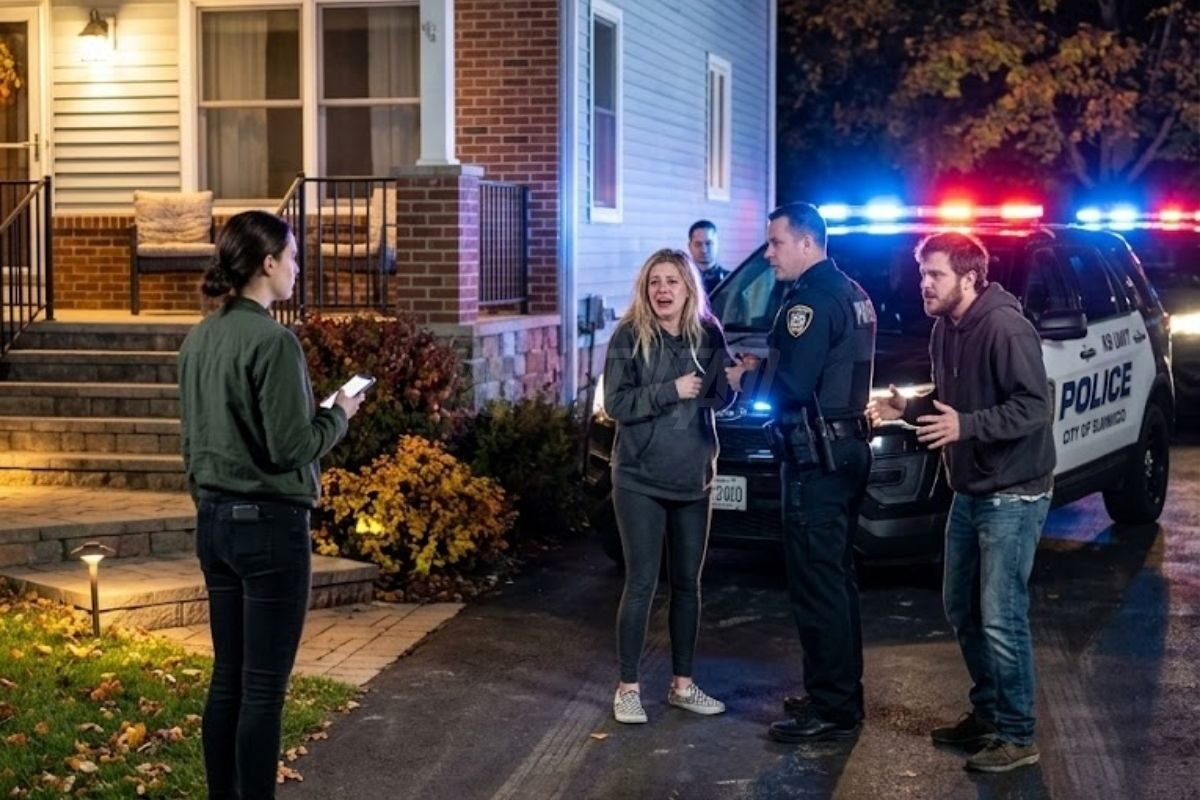
When my sister announced over dinner that I’d be paying her rent and buying her a new van because she was pregnant again and had decided to quit her job, my family reacted like she’d just shared adorable baby news instead of assigning me a bill for her life. I said nothing. Not because I agreed, but because I had spent years surviving that house by learning when silence was more dangerous than shouting. That night, while I was packing to leave for good, I looked up and found a hidden baby monitor aimed right at me. Before the next day was over, my laptop had been sold, my car was missing, and the title had been transferred using a forged version of my name. Then my work login started failing, and I understood this wasn’t just family chaos anymore—it was sabotage. They thought they had me trapped, too broke and too cornered to fight back. I didn’t panic. I hit record, followed the paper trail, and waited. Two weeks later, red and blue lights lit up the front yard.
“Morgan has volunteered to pay my $2,800 rent and the new van payments since I quit my job today.” Courtney dropped that line between lazy bites of Caesar salad, like…
I thought I was walking into a maternity ward to meet my nephew. Instead, I walked into the moment my marriage and my family died at the same time. Before I even reached my sister’s hospital room, I heard my husband behind the door, laughing about how easily I believed him, how useful I had been, and how convenient it was that I kept funding the life he was building in secret. Then my mother said the quiet part out loud: that my failure to have children had made room for the family they actually wanted. And my sister, holding the baby I suddenly understood far too well, called it their blessing. I never opened the door. I never gave them the satisfaction of seeing me break. I left that hospital without a sound, drove home with my hands locked tight around the steering wheel, and started digging through our accounts. By the time their smiling baby pictures reached my phone, I had already found something they were going to regret. – Part 3
The real victory was this: when they tried to turn me into the background of their story, I learned how to become the author of my own. And now, when…
I thought I was walking into a maternity ward to meet my nephew. Instead, I walked into the moment my marriage and my family died at the same time. Before I even reached my sister’s hospital room, I heard my husband behind the door, laughing about how easily I believed him, how useful I had been, and how convenient it was that I kept funding the life he was building in secret. Then my mother said the quiet part out loud: that my failure to have children had made room for the family they actually wanted. And my sister, holding the baby I suddenly understood far too well, called it their blessing. I never opened the door. I never gave them the satisfaction of seeing me break. I left that hospital without a sound, drove home with my hands locked tight around the steering wheel, and started digging through our accounts. By the time their smiling baby pictures reached my phone, I had already found something they were going to regret. – Part 2
By the time the recording ended, my father’s face had become something I had never seen before—emptied, not of feeling, but of his usual ability to shield himself from it….
End of content
No more pages to load