On our fifth wedding anniversary, my husband confessed that his secretary was seven months pregnant. “It’s not my fault you can’t have kids,” he said. That night, I quietly packed my things. The next morning, when he saw the signed divorce papers on the table, he completely lost it.

On the evening of our fifth wedding anniversary, the ocean air in Oceanside City carried a clean, salty chill that usually made me feel safe. Like the world could be rinsed new just by stepping outside. Zayn booked a table at our old favorite place—the kind of restaurant that kept candles in thick glass jars and played soft jazz like a promise. He even asked for the same corner booth where we used to sit when we were still young enough to think love alone could solve anything.
I wore a simple black dress and the diamond band I’d designed myself. Zayn wore his navy suit, crisp and expensive, the uniform of the man he’d become. CEO of a subsidiary, always “on a call,” always “in a meeting,” always halfway out of the room. Still, when the waiter poured our wine, Zayn smiled at me the way he used to, like he was proud to be seen with me.
For a few minutes, I let myself pretend.
We talked about harmless things—my newest sketch set for Starlight Jewelry, his upcoming quarterly report, a movie Elise insisted I should watch. Zayn laughed at the right moments. He even reached across the table and brushed his thumb over my knuckles.
But then his hand drifted back, and he stared at his glass as if it contained an answer.
“Audrey,” he said.
I set my fork down. Something in his voice had the weight of a door closing.
“I need to tell you something.”
The candlelight made his face softer, but it couldn’t hide the tension in his jaw. His eyes looked damp, not from romance but from fear. I could hear the faint clink of plates and the low murmur of other couples celebrating their own milestones, oblivious to the fact that my life was about to split down the middle.
“What is it?” I asked, and even to myself my voice sounded too calm.
Zayn swallowed. “Maya… my secretary… she’s pregnant.”
The sentence didn’t land all at once. It arrived in pieces, like hail against a window. Pregnant. Secretary. My mind tried to reject the meaning the way your body rejects a poison.
“How far along?” I managed.
He looked up, and his gaze flickered—guilt, calculation, panic. “Seven months.”
Seven months.
My brain did the math before my heart could catch up. Seven months meant this wasn’t new. It meant it had been growing quietly while I cooked dinner, while I sat across from him on the couch, while I told myself his distance was stress and not betrayal. Seven months meant he’d been living a double life long enough for it to have roots.
I felt the room tilt.
I reached for my wine glass, but my hand trembled so hard I missed it. The glass slid, tipped, and shattered on the floor. A sharp, bright sound. The restaurant went quiet for a beat, then quickly filled again with polite pretending. A waiter rushed over with napkins and apologies, as if the real mess was the wine.
Zayn didn’t move. He just watched me like he was waiting to see which version of me would appear: the forgiving wife or the screaming stranger.
“I’m sorry,” he said quickly, too quickly. “I was drunk. It was one time. I swear.”
“One time,” I repeated, tasting the lie. One time didn’t create seven months of silence.
Zayn leaned forward, lowering his voice as if secrecy could soften damage. “She tried to… last month. We both wanted to fix it. But it didn’t work. Her body’s been weak since.”
The words hit me in the chest with a cold kind of disgust. Fix it. Like a mistake on a spreadsheet. Like a stain you could scrub out before anyone noticed.
I heard myself inhale, slow and controlled, the way my etiquette training drilled into me back in university. I had always been good at composure. People at work called it grace. Tonight, it felt like armor.
“What do you want from me?” I asked.
Zayn’s shoulders loosened, just a fraction, like he’d been bracing for impact and realized the blow wasn’t coming—yet. He reached for my hand. His palm was warm, familiar, and suddenly unbearable.
“Once she gives birth,” he said, and the words spilled faster now, relieved, “we’ll raise the baby as our own. We’ll give her money. We’ll send her away. Oceanside’s big enough—she’ll disappear. The baby won’t suffer, and you…” His voice softened, almost tender. “You won’t have to suffer anymore.”
I stared at him. The audacity of his certainty made my stomach turn.
“You’re saying this like it’s a gift,” I said quietly.
Zayn’s face tightened. “It’s not my fault you can’t have kids,” he snapped, and there it was—the truth he’d been carrying like a knife. He looked almost angry, as if my body had personally betrayed him.
The air left my lungs. The restaurant noise blurred into a distant hum. I saw flashes of the last five years: the baby shower invitations I RSVP’d “yes” to with a smile; the way my mother-in-law’s eyes lingered on my empty arms; the months I pretended not to care when my period arrived like a cruel clock.
Zayn kept talking, softer now, already regretting the sharpness. “Audrey, please. The baby is already seven months along. Please let her keep it.” He paused, eyes shining. “I’ll walk away with nothing, but please don’t take this child away from her.”
I nodded, because it was the only movement my body remembered how to make.
“Fine,” I said, and my voice sounded like someone else’s. “Let her have the baby.”
Relief flooded his features. He didn’t see the way my mind had gone cold. He didn’t see the new shape forming behind my eyes—a plan, sharp-edged and quiet.
Zayn reached for my hand again. “Thank you,” he whispered. “Thank you for supporting my decision. That baby is ours.”
I didn’t pull away. I let him believe what he needed to believe.
When we got home, Zayn tried to kiss my temple in the hallway like a man grateful for mercy. I stood still, letting his lips brush my skin without feeling anything at all.
He went to bed quickly, exhausted by confession. I went into the closet and stared at my suitcase.
I didn’t cry. Not yet.
I folded clothes with careful precision, as if I were packing for a business trip. I slid my passport into the side pocket. I took the small velvet box that held my grandmother’s earrings. I moved through the apartment as quietly as a ghost, the way a woman moves when she finally understands she’s been living in someone else’s story.
In the kitchen, I found the pen Zayn always used for signing documents. I laid a stack of papers on the table—divorce papers I’d had drafted months ago and never thought I’d need, just in case the shifting cold in our marriage turned into something worse.
I signed my name. Audrey Robinson. Five years of writing it had made it feel permanent.
Tonight, it felt like something I could set down.
Before dawn, I sat at the table with a cup of tea cooling untouched. I listened to the steady rhythm of Zayn’s breathing down the hall, and I wondered when he stopped being the man who once sat beside me for thirty nights while I designed the ring on his finger.
When the first pale light spilled through the window, I stood, placed the signed papers neatly where he’d see them, and took my suitcase to the door.
I paused with my hand on the knob.
For the briefest moment, I imagined another version of us—one where he’d chosen honesty before betrayal, where we’d sat together in a doctor’s office and faced the truth like partners.
But that version wasn’t real.
So I opened the door, stepped into the morning air, and left without a sound.
Five years of marriage can shrink into a single moment if you look at it from far enough away. But living it felt like walking through rooms that slowly lost their light, one by one, until you forgot you were in the dark.
When Zayn and I first married, we weren’t naive—we were hopeful. We’d been together since university, back when he was student council president and I was the head of the etiquette department, the girl everyone teased for having perfect posture and an impossible ability to keep calm under pressure. Zayn used to call me his lighthouse. He said I made him feel anchored.
We talked about children the way young couples do, with laughter and loose timelines. “Not right away,” we’d agree. “We’ll travel first. We’ll build a home.” But we also talked about names. Zayn liked old-fashioned ones. I liked names that sounded like music.
When the first year passed without a pregnancy, I told myself what I’d always believed: life doesn’t bend to impatience. Zayn held me after negative tests and said, “Good things take time. Our little one is probably waiting for the perfect moment to surprise us.”
I believed him.
The second year brought more questions, mostly from his parents. “Have you seen a specialist?” his mother asked, smiling too brightly. “Sometimes a little help is all it takes.” His father made comments about legacy and the Robinson name, as if my body was a business problem.
Zayn tried to defend me at first, but pressure is patient. It leaks into a marriage the way water leaks into walls—quietly, steadily, until something collapses.
By the third year, Zayn’s comfort started sounding like disappointment dressed up as concern. His eyes lingered on babies in grocery stores. He’d pause at the sound of a child laughing in a park and go strangely silent.
Then one night, after a dinner with his parents, he said, “I made you an appointment.”
I looked up from my laptop, where I was refining a ring design for Starlight’s new line. “An appointment for what?”
“A gynecologist,” he said, like it was obvious. “The best one in Oceanside City. We need to figure out what’s wrong.”
The word wrong landed like an accusation.
I closed my laptop slowly. “You scheduled a fertility evaluation for me without asking me.”
Zayn’s jaw tightened. “It’s been five years, Audrey.”
“And?” I said. My voice rose, and I hated that it did, hated that he could pull emotion out of me like a thread. “If anything, you should be the one to get tested first. It’s easier for men. If your results come back normal, then I’ll go.”
His expression darkened. “How could I possibly have a problem?”
The certainty in his tone made something cold settle in my stomach.
“It’s the fairest approach,” I said, forcing steadiness. “And the least painful.”
Zayn threw his hands up like I was being unreasonable. “Are you really not going to consider our future? All I’m asking is for you to get tested. If there’s an issue, we can find other ways.”
Other ways.
The words were almost kind, but beneath them was something sharper: the implication that the issue was mine to solve, mine to carry.
“Don’t you want to have a baby that belongs to us?” he asked. “One created from our love.”
I stood there, heart pounding, looking at the man I thought I knew. The gentle Zayn who once sat with me through design drafts and late-night ramen runs had been replaced by someone cold, someone who could weaponize my deepest ache.
“If you take the test,” I said finally, “then I will too.”
He didn’t agree outright. He just stared at me with a look that felt like distance.
After that night, something changed. Zayn started traveling more. “Business trip,” he’d say, tossing a suit into a garment bag. “Just a few days.” But the trips grew longer, the returns quieter. When he came home, his presence felt like a shadow moving through the apartment.
I told myself it was work. I told myself his stress had nothing to do with me.
Then one afternoon he walked in from yet another trip, loosened his tie, and I saw it.
His wedding ring was gone.
The ring I designed—over thirty nights of obsessive refinement, every line and curve made with the kind of care you give only to something sacred. Zayn had watched the process, listening to me explain why I chose that stone, why the setting mattered, why the tiny star-like facets were meant to catch light even in darkness.
He understood what it symbolized: the future we were building.
I tried to sound casual. “Where’s your ring?”
Zayn glanced at his bare finger like he was noticing it for the first time. Then he chuckled softly. “Oh. I took it off when I went swimming last time and forgot to put it back on.”
Forgot.
Zayn didn’t forget details. He remembered the anniversary of my first promotion. He remembered the exact way I liked my coffee. He remembered the name of my childhood dog.
But he forgot the ring that promised me he belonged to us.
That night, I sat at my desk at home, staring at design sketches. My latest ring—the one with a cluster of diamonds like a small galaxy—had just become Starlight’s best-selling piece of the season. I should have been thrilled. I had been ready to tell Zayn, to share the victory like we used to share everything.
Instead, he spoke first. “Audrey,” he said, voice heavy, “I need to tell you something.”
And then: “Maya… she’s pregnant. Seven months.”
The timeline aligned perfectly with the fight about testing. With the start of the business trips. With the missing ring.
I saw the pattern as if someone had finally handed me the whole picture.
When he said, “We’ll raise the baby as our own,” I realized Zayn hadn’t just betrayed me—he’d already decided my role in the aftermath. I was supposed to accept his mess, mother his consequences, and thank him for it.
That’s what made me pack that night without tears. That’s what made me sign papers with a calm hand.
But leaving wasn’t the end. It was the beginning of something Zayn never imagined me capable of.
Because as I walked into the morning air with my suitcase, one thought stayed steady in my mind, sharp as a blade:
If Zayn wanted a child so badly he’d destroy our marriage for it, then I would make sure he got exactly what he deserved.
I didn’t go far that first morning. I checked into a small boutique hotel near the marina—white walls, linen sheets, quiet halls that smelled faintly of citrus cleaner. I chose it because it was close enough to my office, and because it felt anonymous. Like I could exist there as Audrey again, not Audrey Robinson.
Zayn found the divorce papers by noon.
My phone rang until it felt like an alarm embedded in my bones. I let it ring. Then I silenced it. Then I watched the screen light up with message after message—some furious, some pleading, some panicked.
When I finally answered, his voice cracked through the speaker. “Are you serious?”
“Yes,” I said.
“You can’t do this,” he snapped, anger rushing in to cover fear. “We can fix this.”
“You already fixed it,” I replied, and hung up before my voice could shake.
That afternoon, I went to work like nothing had happened. Starlight Jewelry’s headquarters was all glass and polished stone, a place built to reflect light in a way that made everything look more valuable. I’d worked hard to become lead designer there. I refused to let Zayn’s choices take my career from me too.
Elise cornered me near the elevator. She was the kind of friend who read faces like books and never pretended not to see what was obvious.
“You look like you slept in your clothes,” she said quietly.
“I didn’t,” I answered. “But close enough.”
She didn’t push. She simply walked with me to my office and shut the door behind us. “Audrey,” she said gently, “what happened?”
I stared at the sketches on my desk—tiny stars etched into metal, diamonds set like constellations—and felt something inside me harden into resolve.
“I need you to help me,” I said.
Elise’s eyes sharpened. “With what?”
But before I told her everything, I had to know one thing. Not for revenge—at least not yet—but for reality. For years, I’d carried the unspoken assumption that my body was the problem. Zayn’s family had planted it like a seed, and Zayn had watered it with his quiet distance until it grew into shame.
If I was going to move forward, I needed the truth.
So I booked a full medical evaluation under my own name, paid out of pocket, and told no one. Not Elise, not my parents, not a soul. I did it the way I did everything serious in my life—methodically.
The clinic was sterile and bright. The nurse spoke in a calm tone that reminded me of weather reports. Blood tests. Imaging. Paperwork. Waiting rooms filled with women staring at their phones like they were trying not to hope.
A week later, the results came in.
Everything was normal.
Not “good for my age,” not “mostly fine,” but normal. Healthy. No indication of infertility. No obvious barriers.
I sat in my car in the parking lot with the report trembling in my hands, and a strange relief washed through me—relief so sharp it almost hurt.
Then realization followed, heavy and unavoidable.
If I was fine, then the reason we hadn’t conceived for five years… might not have been me.
The memories returned in a new light: Zayn’s outrage at the suggestion he get tested. His certainty. The way he’d turned it into a moral failure on my part.
Almost like he’d known.
And then Maya—pregnant, supposedly by him, on the “first try,” right after our biggest fight.
The irony was bitter enough to make me laugh, but the laughter came out hollow.
I took a deep breath and stared at the clinic report as if it were a blueprint.
A plan formed, clean and precise.
If Zayn and his family thought I was disposable, I would prove how costly that assumption could be.
That evening, I answered Zayn’s call.
His voice came through tight with exhaustion. “Audrey,” he said, softer now, “I was wrong. I’ll do anything. Please.”
I pictured him in our apartment, the same place where he’d spoken Maya’s name like it was an inconvenience. I pictured him pacing, running a hand through his hair, calculating damage.
I let my voice tremble just enough. “Right now I feel… incredibly insecure.”
He exhaled, like he’d been waiting for a crack he could slip through.
“But because I truly loved you,” I continued, “I’m willing to trust you one more time.”
“Thank you,” he whispered, and I could hear relief flooding him. “Audrey, I swear I’ll never betray you again.”
I paused, then let my tone shift into something thoughtful. “If you really want to ease my worries,” I said, “how about transferring our jointly owned fixed assets into my name?”
Silence.
For a moment, I heard only his breathing.
Then: “What?”
“It’s just for peace of mind,” I said quickly, gentle, reasonable. “Zayn, if I wanted to leave you, I could just file for divorce. I’m not trapped. We’ve been together eight years. I can’t just let go that easily.” I let a pause hang, then softened further. “I will accept this child. I’ll raise him as my own. I just… need to feel secure.”
I hated the way I had to perform vulnerability, but I didn’t hate it enough to stop.
Zayn hesitated, then said, “That’s… a lot of property, Audrey.”
“And you said you’d do anything,” I replied, letting a single tear enter my voice like an instrument.
The next week, Zayn transferred everything he could—houses, condos, investment properties—into my name. The documents were notarized. Filed. Official.
He did it because guilt made him reckless, and because arrogance made him believe I was still the obedient woman who would accept whatever story he handed me.
He didn’t understand that my obedience had always been a choice.
Now it was a strategy.
A few days later, Maya asked to meet.
I chose a café downtown with big windows and a busy lunch crowd—public enough that neither of us could explode without witnesses. I arrived early with a folder of paperwork and spread it across the table like I was reviewing designs. I made sure the notarized documents sat right on top.
| Next » |
News
When my daughter sold my wife’s vintage car for pennies, believing she could use it to fund a vacation, I never expected to find the truth hidden inside the car. What seemed like a simple betrayal turned out to be a calculated move, one my wife had planned before her passing—an envelope tucked behind the dashboard, holding a legal trust that shielded the car from unauthorized sale. My daughter’s decision to liquidate the asset without understanding its true value had been a failure of due diligence, and it led her right into the trap my wife had set to protect me from exactly this…
Eight months after Catherine died, I still made two mugs of coffee every morning. I wish I could tell you I did it because I was sentimental, because I wanted…
When my sister announced over dinner that I’d be paying her rent and buying her a new van because she was pregnant again and had decided to quit her job, my family reacted like she’d just shared adorable baby news instead of assigning me a bill for her life. I said nothing. Not because I agreed, but because I had spent years surviving that house by learning when silence was more dangerous than shouting. That night, while I was packing to leave for good, I looked up and found a hidden baby monitor aimed right at me. Before the next day was over, my laptop had been sold, my car was missing, and the title had been transferred using a forged version of my name. Then my work login started failing, and I understood this wasn’t just family chaos anymore—it was sabotage. They thought they had me trapped, too broke and too cornered to fight back. I didn’t panic. I hit record, followed the paper trail, and waited. Two weeks later, red and blue lights lit up the front yard. – Part 3
“You don’t owe me anything,” I’d say. “But this is yours if you want it. First month’s rent somewhere safe. A bus ticket. A deposit. A little pocket of air…
When my sister announced over dinner that I’d be paying her rent and buying her a new van because she was pregnant again and had decided to quit her job, my family reacted like she’d just shared adorable baby news instead of assigning me a bill for her life. I said nothing. Not because I agreed, but because I had spent years surviving that house by learning when silence was more dangerous than shouting. That night, while I was packing to leave for good, I looked up and found a hidden baby monitor aimed right at me. Before the next day was over, my laptop had been sold, my car was missing, and the title had been transferred using a forged version of my name. Then my work login started failing, and I understood this wasn’t just family chaos anymore—it was sabotage. They thought they had me trapped, too broke and too cornered to fight back. I didn’t panic. I hit record, followed the paper trail, and waited. Two weeks later, red and blue lights lit up the front yard. – Part 2
“I wasn’t going to say anything until it was finalized,” I said. “I didn’t want to jinx it. But… I joined a class-action lawsuit against my old company. Unpaid overtime…
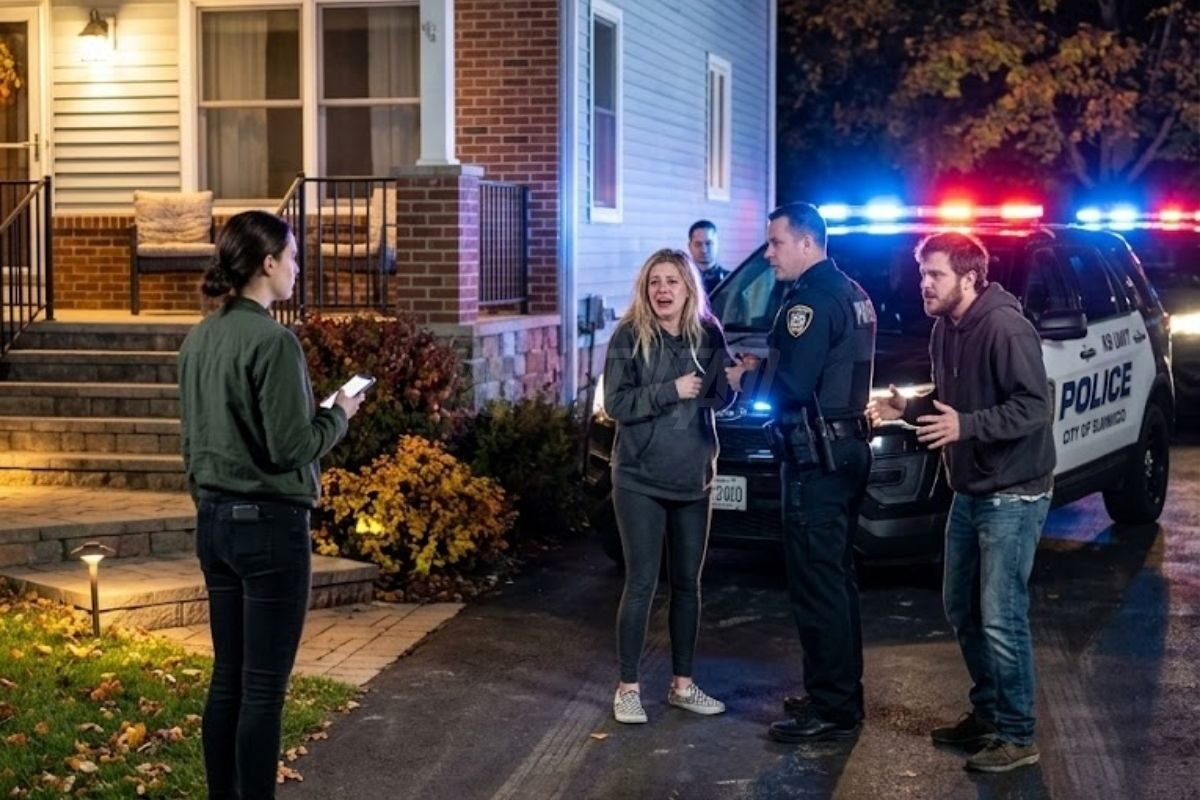
When my sister announced over dinner that I’d be paying her rent and buying her a new van because she was pregnant again and had decided to quit her job, my family reacted like she’d just shared adorable baby news instead of assigning me a bill for her life. I said nothing. Not because I agreed, but because I had spent years surviving that house by learning when silence was more dangerous than shouting. That night, while I was packing to leave for good, I looked up and found a hidden baby monitor aimed right at me. Before the next day was over, my laptop had been sold, my car was missing, and the title had been transferred using a forged version of my name. Then my work login started failing, and I understood this wasn’t just family chaos anymore—it was sabotage. They thought they had me trapped, too broke and too cornered to fight back. I didn’t panic. I hit record, followed the paper trail, and waited. Two weeks later, red and blue lights lit up the front yard.
“Morgan has volunteered to pay my $2,800 rent and the new van payments since I quit my job today.” Courtney dropped that line between lazy bites of Caesar salad, like…
I thought I was walking into a maternity ward to meet my nephew. Instead, I walked into the moment my marriage and my family died at the same time. Before I even reached my sister’s hospital room, I heard my husband behind the door, laughing about how easily I believed him, how useful I had been, and how convenient it was that I kept funding the life he was building in secret. Then my mother said the quiet part out loud: that my failure to have children had made room for the family they actually wanted. And my sister, holding the baby I suddenly understood far too well, called it their blessing. I never opened the door. I never gave them the satisfaction of seeing me break. I left that hospital without a sound, drove home with my hands locked tight around the steering wheel, and started digging through our accounts. By the time their smiling baby pictures reached my phone, I had already found something they were going to regret. – Part 3
The real victory was this: when they tried to turn me into the background of their story, I learned how to become the author of my own. And now, when…
I thought I was walking into a maternity ward to meet my nephew. Instead, I walked into the moment my marriage and my family died at the same time. Before I even reached my sister’s hospital room, I heard my husband behind the door, laughing about how easily I believed him, how useful I had been, and how convenient it was that I kept funding the life he was building in secret. Then my mother said the quiet part out loud: that my failure to have children had made room for the family they actually wanted. And my sister, holding the baby I suddenly understood far too well, called it their blessing. I never opened the door. I never gave them the satisfaction of seeing me break. I left that hospital without a sound, drove home with my hands locked tight around the steering wheel, and started digging through our accounts. By the time their smiling baby pictures reached my phone, I had already found something they were going to regret. – Part 2
By the time the recording ended, my father’s face had become something I had never seen before—emptied, not of feeling, but of his usual ability to shield himself from it….
End of content
No more pages to load